
Phodu Club is a bootstrapped ed-tech brand selling test series, courses, and prep resources for engineering entrance exams like JEE Main, BITSAT, UGEE, COMEDK, KCET, and more.
When I started, organic search was not a serious acquisition channel for them. The site had almost no search visibility, no strong backlink profile, no large content engine, and it was competing in one of India’s most brutal SEO categories: exam prep.
But the opportunity was obvious. Every month, lakhs of students were searching for mock tests, test series, syllabus updates, cutoffs, exam dates, answer keys, result updates, and preparation plans.
Phodu Club had the product. They just were not showing up when students were actively looking to buy. So I built the SEO system from scratch.
- ₹3.6 crores total revenue generated across 2 annual SEO cycles.
- ₹1.2 crore revenue generated in one SEO-led sales cycle.
- 7,500+ organic leads generated from search-led acquisition.
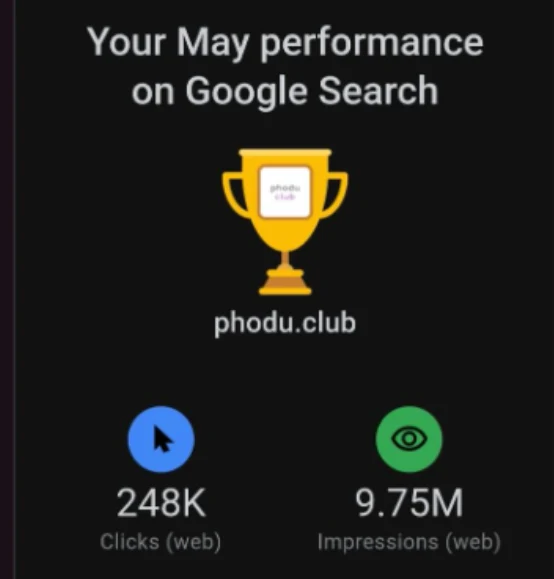
- Phodu Club scaled to 200K+ monthly organic traffic during peak sales season.
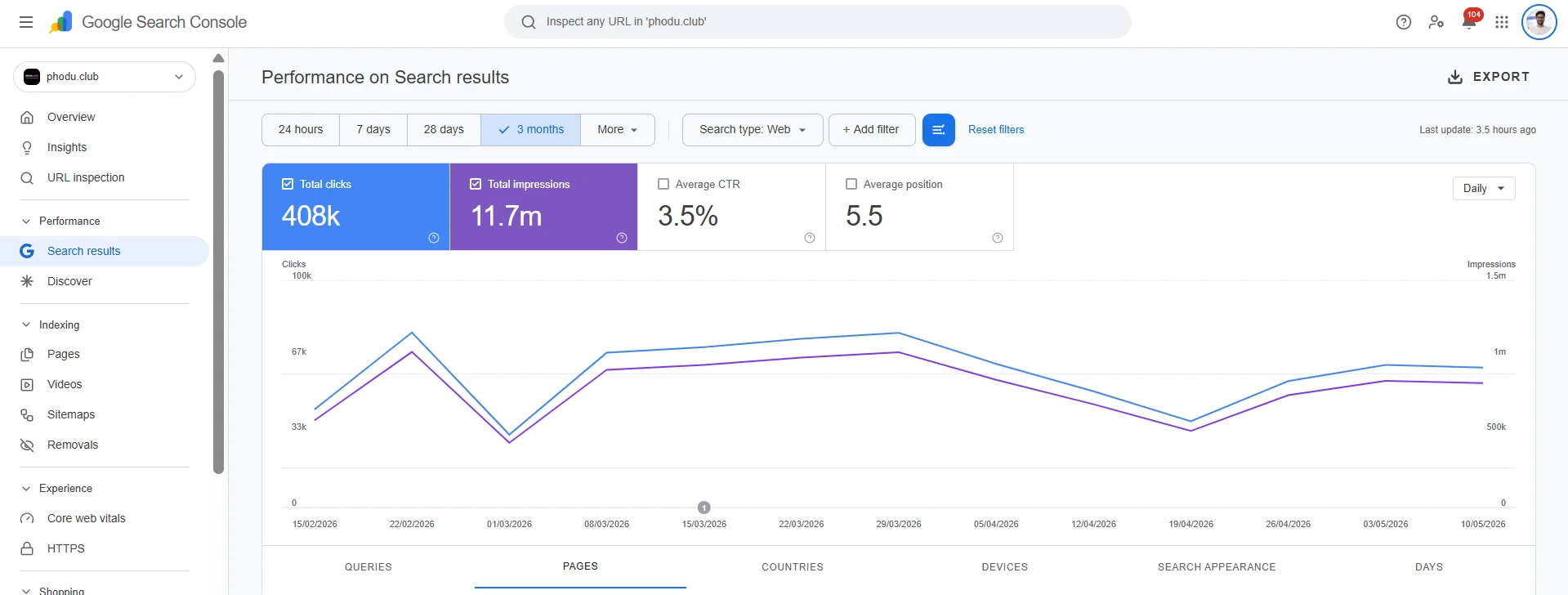
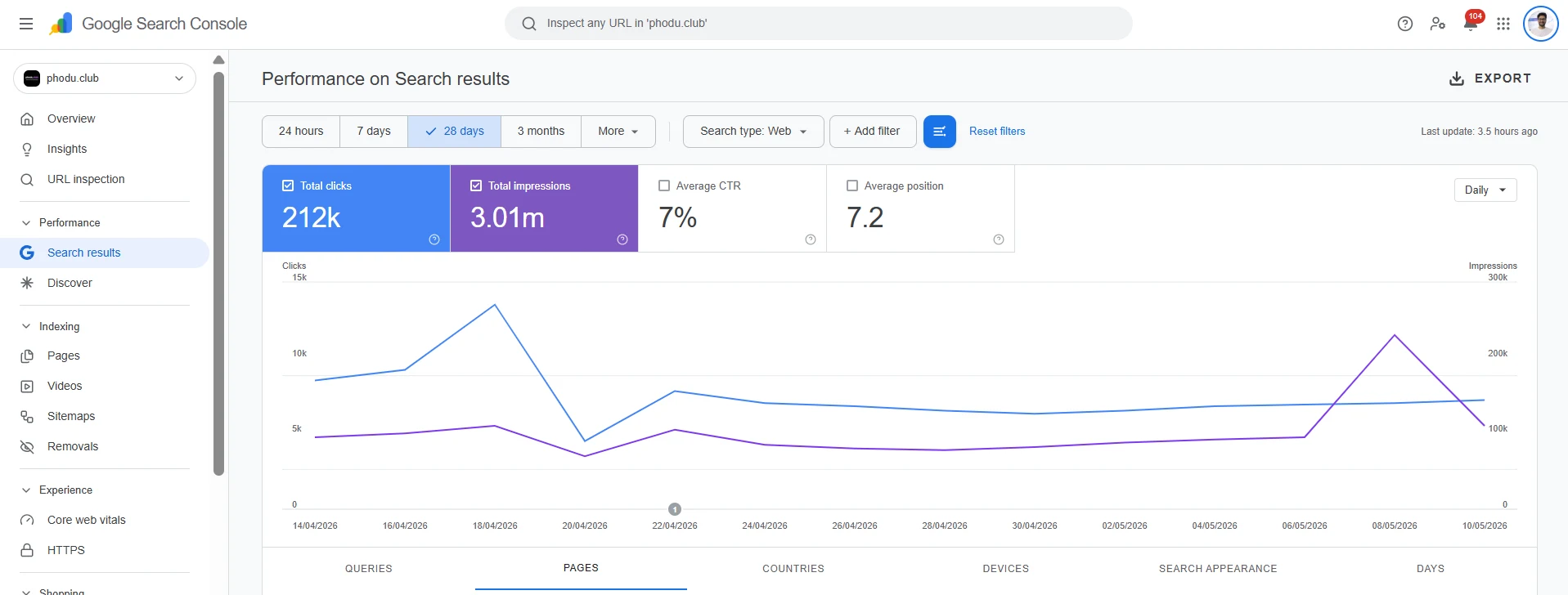
- GSC showed 408K clicks and 11.7M impressions in 3 months, plus 212K clicks and 3.01M impressions in 28 days.
The starting point
The earlier SEO cycle had already proved that Phodu Club could go from near-zero visibility to meaningful traffic through content-led SEO. The original campaign focused on building visibility from scratch, targeting exam prep keywords, and converting organic traffic into leads and paying users.
The ongoing partnership took that same foundation and pushed it harder: more exams, more pages, more BOFU intent, and more sales during peak season.
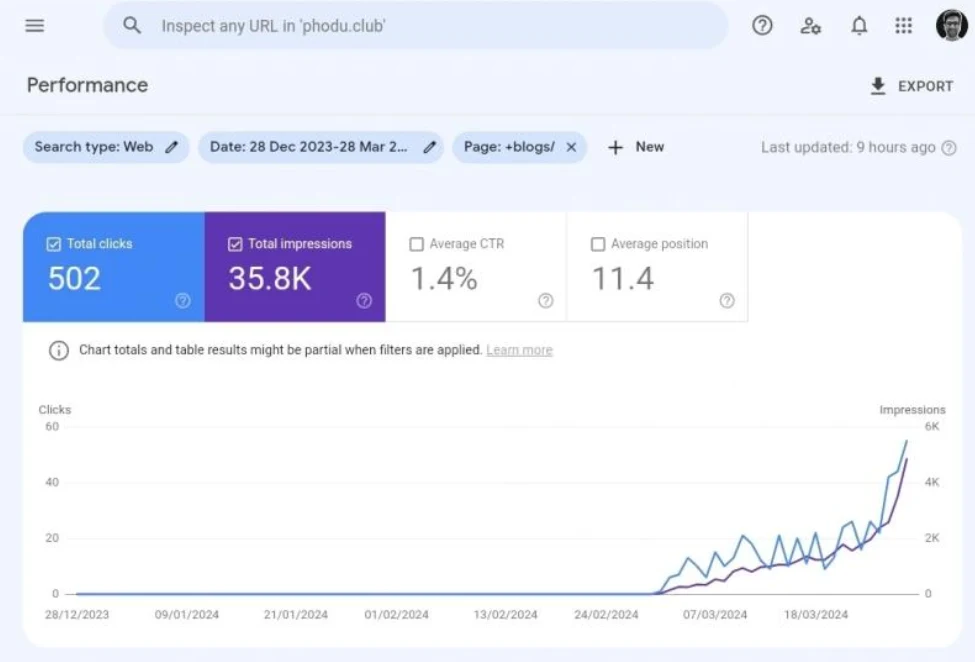
The target
I wanted to turn search into a full-funnel sales channel.
That meant ranking for informational searches, capturing students early, and then pushing them toward test series, courses, and signup pages when purchase intent was high.
The goal was not traffic for screenshots. The goal was revenue.
What I did
I built the strategy around student buying behavior.
Students rarely land on a course page and buy cold. They search first. They compare. They check dates, syllabus, pattern, mock tests, cutoffs, previous year questions, and prep plans.
So I mapped the search funnel around that behavior.
Exam clusters
JEE Main, BITSAT, UGEE, COMEDK, KCET, syllabus, dates, cutoffs, previous year questions, and prep plans.
Money pages
BITSAT test series, UGEE test series, JEE Main mock tests, exam-specific course pages, and comparison pages.
Seasonal demand
Admit cards, result dates, answer keys, registration deadlines, counselling updates, and exam-day searches.
In ed-tech SEO, timing matters. Admit cards, result dates, answer keys, registration deadlines, counselling updates, and exam-day searches create massive short-term spikes.
Most brands react after the spike starts. I planned before it.
That helped Phodu Club catch demand when students were most active, most anxious, and most likely to buy.
The numbers
Phodu Club scaled to 200K+ monthly organic traffic during peak sales season. But traffic was not the real win. The real win was what that traffic turned into.
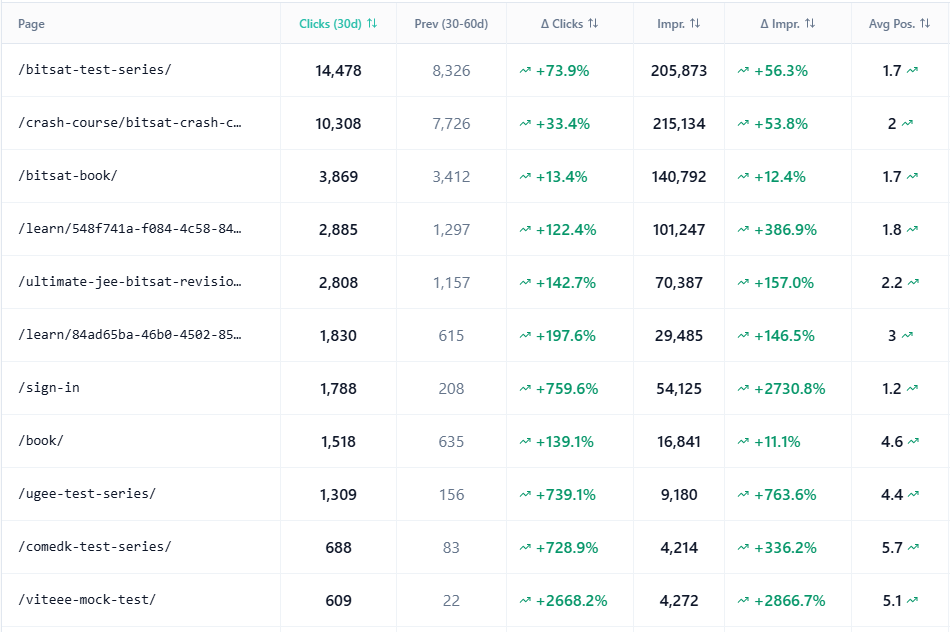
High-intent rankings where money is made
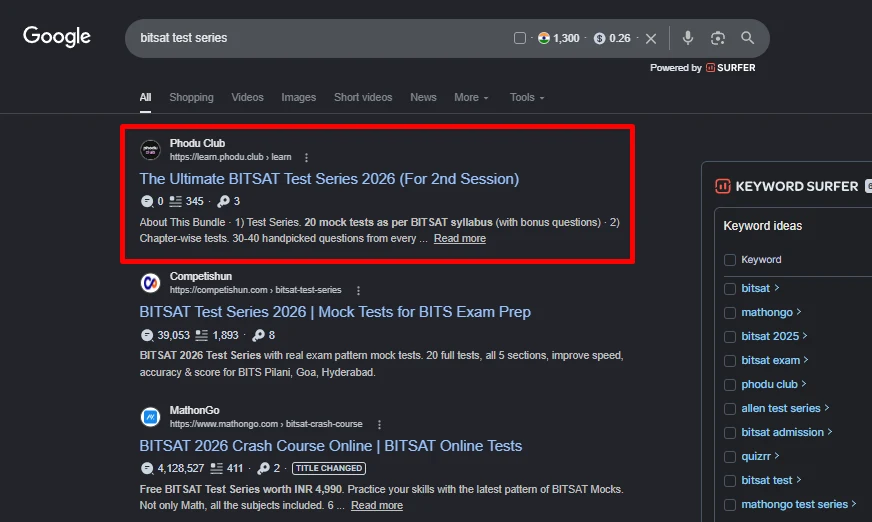
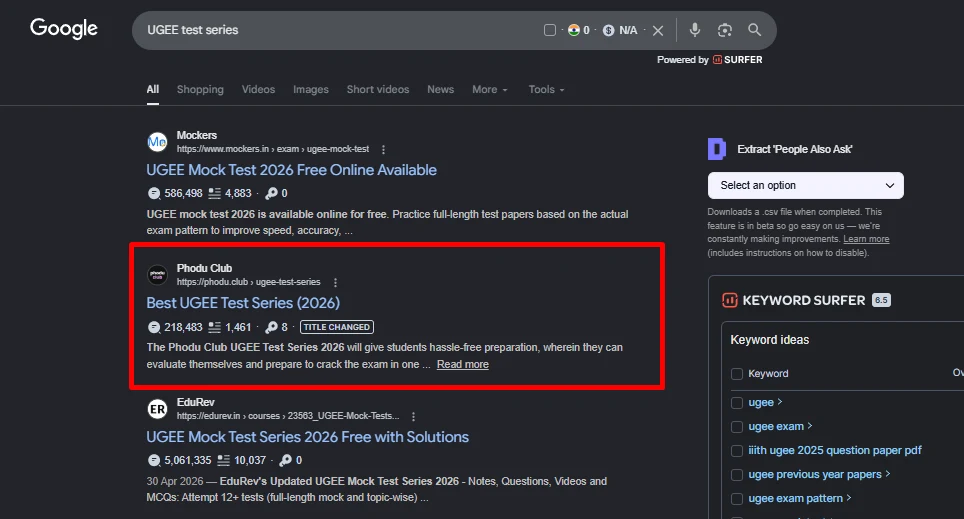
I also helped Phodu Club rank for high-intent test series queries where money is made.
For example, Phodu Club ranked on page 1 for searches like BITSAT test series and UGEE test series, competing with large ed-tech players and established exam prep sites.
That matters because these are not casual searches. A student searching for a test series is already close to buying.
Why this worked
This worked because I did not write random blogs. Every page had a commercial role.
Some pages pulled in traffic. Some pages built trust. Some pages captured exam-season demand. Some pages pushed students toward signup. Some pages sold directly.
The internal linking system moved students from information to action without making the experience feel forced. A student could enter through a syllabus page, move to a prep plan, compare test series, and then land on a paid product page.
That is where the revenue came from. Not from publishing more content. From publishing the right pages and connecting them to the buying path.
Informational demand
Syllabus, dates, marks vs percentile, cutoffs, admit cards, and preparation plans captured scale.
Buying demand
Test series, course pages, comparison terms, and exam-specific prep queries converted closer-to-purchase students.
The real story
Phodu Club did not have a huge SEO moat when this started. They did not win because of massive authority.
They won because the strategy matched how students search before they spend money.
From zero organic visibility to 200K+ monthly traffic. From search clicks to 7,500+ leads. From content to ₹3.6 crores in SEO-led revenue.
That is what SEO should do. Not just rank. Sell.