
This is an NDA-protected health tech brand funded on Shark Tank USA.
I can't name the company.
But I can talk about the work.
When I started, the brand was already getting around 5,000 monthly organic visits. That sounds decent until you look at the category.
They were in health tech.
A space where search demand is massive, buyer intent is high, and every symptom, test, hormone, gut issue, sexual health concern, and treatment query can turn into a lead.
The problem?
They were barely scratching the surface.
They had a real product. They had trust. They had a growing brand.
But in search, they were nowhere close to where they should have been.
So I treated the project like one thing from day one: a revenue channel, not a blog engine.
- 5K to 260K monthly organic traffic — a 52x increase.
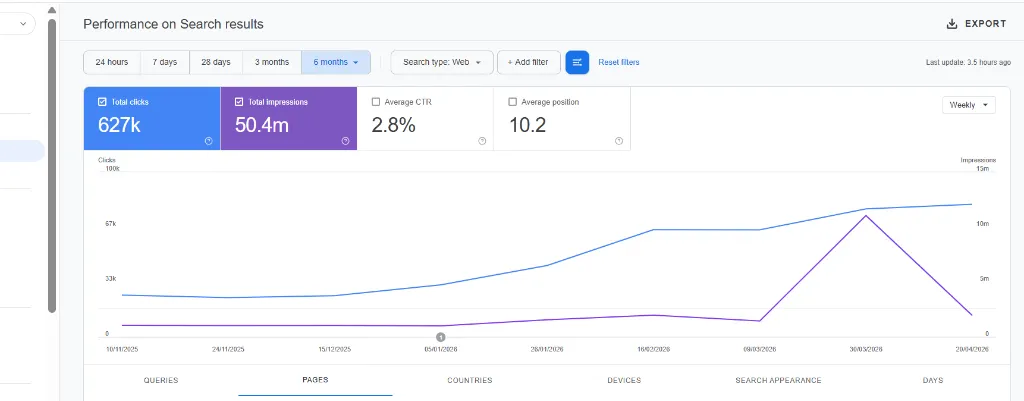
- 627K clicks in 6 months, 50.4M impressions.
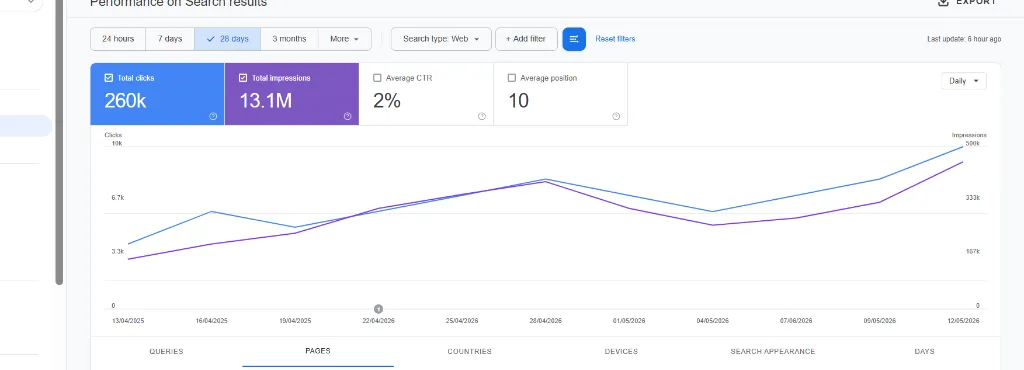
- 260K clicks in 28 days, 13.1M impressions.
- Average position 10 in the latest 28-day view.
- 5,000 to 7,000 leads/month from organic.
- $500K in SEO-led revenue.
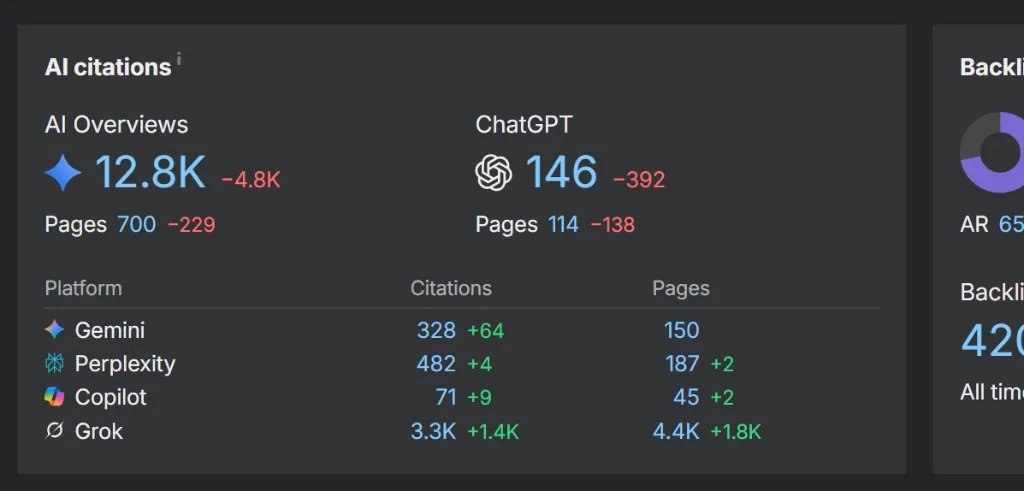
- 5K+ LLM citations. 12.8K mentions in Google AI Overviews.
- 14-month active partnership.
The starting point
The site was getting traffic, but not enough of the right kind.
Around 5,000 visits/month.
In health tech, that is early-stage traffic.
There were thousands of searches happening every day around blood tests, hormone health, digestive health, sexual health, daily health symptoms, lab markers, treatment questions, condition-based searches, and test interpretation queries.
The brand had the product depth to serve that audience.
But the site did not yet own the search paths.
So I built the SEO plan around high-intent health searches that could bring users in before they were ready to book, buy, or submit a lead.

What I did
I split the strategy into four money zones.
Daily Health for broad symptom and wellness queries.
Digestive Health for gut-related searches with strong test and treatment intent.
Sexual Health for sensitive, high-conversion searches where users want privacy and fast answers.
Hormone Health for blood test, testosterone, thyroid, and marker-based searches.
Then I built the content system around the way people actually search when they are worried about their body.
They don't start with a brand name.
That search behavior is where the growth came from.
I created pages that answered the question, matched medical intent, built trust, and moved users toward the brand's offer.
Not random traffic. Commercially useful traffic.
The breakout
The growth did not happen because of one article.
It happened because the site started owning entire clusters.
Pages around blood tests, health markers, sexual health, digestive issues, hormones, and treatment topics started pulling serious volume.
Some individual pages reached 8K to 26K+ monthly visits.
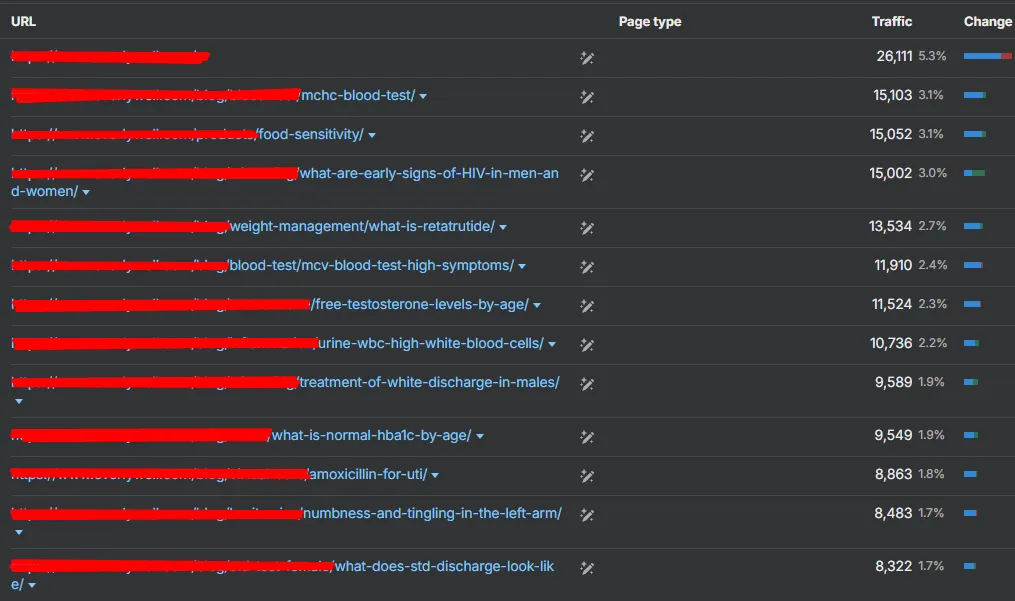
And once Google started trusting the site across these categories, the compounding kicked in.
More rankings. More clicks. More leads. More revenue.
After 14 months, the site scaled from 5,000 monthly visits to 260K/month.
That is a 52x increase in monthly organic traffic.
The numbers
Here is what the SEO system produced:
The important part is not just the traffic.
It is the lead volume.
At 5,000 to 7,000 leads/month, organic search stopped being a support channel.
It became one of the biggest growth drivers in the business.
Why it worked
Health SEO is not won by publishing generic advice.
It is won by owning intent.
A person searching for "what is normal HbA1c by age" is not the same as someone searching for "free testosterone levels by age."
A person searching for early health symptoms is not in the same state of mind as someone looking for a test or treatment.
So I built different page types for different intent stages.
Some pages captured top-of-funnel searches. Some educated users. Some pushed toward tests. Some drove leads directly.
The site architecture connected these pages so users could move from a health concern to a next step without friction.
Before
5,000 monthly visits. Generic health content. No search ownership across key health verticals. Organic was a small support channel.
After
260K monthly visits. Intent-mapped content across four health zones. 5,000-7,000 leads/month. $500K SEO-led revenue. Organic became a primary growth engine.
That is how search traffic turned into revenue.
The real story
This was not a "publish blogs and hope" campaign.
This was a health search takeover.
The brand started at 5K monthly visits.
Within 14 months, I scaled it to 260K/month, drove 5,000 to 7,000 leads/month, and generated $500K in SEO-led revenue.
For a Shark Tank-backed health tech company, that is the only story that matters.
Search went from small channel to serious revenue engine.